
Filter

Electronic pressure switches for pumps

Electronic pressure switches for pumps

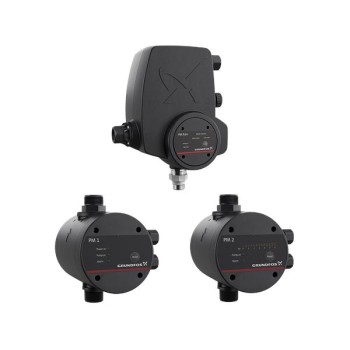
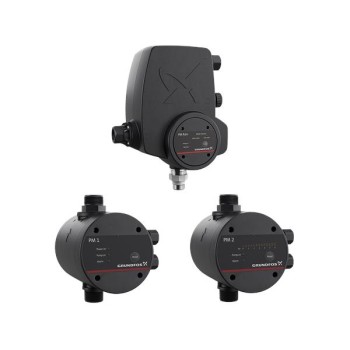
An electronic pressure switch is a device for controlling a pump based on measuring the pressure in the system. Unlike a mechanical pressure switch that uses a diaphragm/piston and a spring, an electronic pressure switch uses a pressure sensor and electronics that process the signal and control the outputs to turn the pump on/off.

It allows precise setting of cut-in and cut-out points, often with a digital display of the current pressure, programmable hysteresis, dry-running protection, low/high pressure, and the ability to integrate into more complex control systems.

Applications of electronic pressure switches

  • Domestic water supply systems with booster pump and pressure vessel.
  • Booster systems for increasing pressure in buildings.
  • Well and submersible pumps for domestic and agricultural water supply.
  • Industrial pumping installations requiring more precise and reliable control.

Advantages of electronic pressure switches

  • Higher measurement accuracy and lower hysteresis compared to mechanical pressure switches.
  • Programmable on/off points and hysteresis adapted to the specific system.
  • Built-in display for visualizing current pressure and system status.
  • Additional protections – dry running, low/high pressure, short duty cycles.
  • Lack of mechanical moving parts in the sensor, which increases reliability when properly sized.

How to choose an electronic pressure switch

For proper selection, data is required on the type of pump (surface, deep, booster), the operating pressure of the system, the desired on/off points, the type of electrical supply and load (pump power), the necessary protections and the installation requirements (thread, connection pressure, degree of protection).

Send us the available data about your pumping system so that we can offer a suitable electronic pressure switch for control and protection.

Brand: Grundfos Stock: In Stock
.pm-start-product { --pm-blue: #005eb8; --pm-blue-dark: #003f7d; --pm-dark: #1f2933; --pm-text-muted: #5b6570; --pm-border: #d9e1e8; ..
price from
120.41€
Ex Tax:120.41€
Brand: Grundfos Stock: In Stock
.pm-plus-product { --pmp-blue: #005eb8; --pmp-blue-dark: #003f7d; --pmp-dark: #1f2933; --pmp-muted: #5b6570; --pmp-border: #d9e1e8; ..
price from
203.49€
Ex Tax:203.49€
Add to Cart
Showing 1 to 2 of 2 (1 Pages)

Frequency Asked Questions (FAQs)

What is an electronic pressure switch for pumps?
What is the difference between a mechanical and electronic pressure switch?
What are the main advantages of an electronic pressure switch?
The main advantages are higher accuracy, programmable on/off points, lower hysteresis, built-in pressure display and additional pump protections.
How does an electronic pressure switch work in a pumping system?
The sensor measures the pressure in real time, the electronics compares the value with the set points and turns on the pump when it drops below the lower limit, and turns it off when it reaches the upper limit, while at the same time it can monitor for anomalies.
What protections can an electronic pressure switch provide?
It can provide protection against dry running, low or high pressure, too frequent switching on (short cycles) and other anomalies, depending on the model and settings.
Can an electronic pressure switch replace a mechanical pressure switch?
In many cases, yes, if it is compatible with the pressure, power and type of the pump and if the electrical parameters (voltage, current) meet the requirements of the system.
Where is the electronic pressure switch installed?
It is usually installed on the pressure pipeline, near the pump or pressure vessel, in a location with representative pressure for the entire system and easy access for adjustment.
What data is needed to select an electronic pressure switch?
System operating pressure, desired on/off points, pump type and power, voltage and current, required protections and installation requirements and degree of protection are required.
Product Filter