Filter

Wastewater treatment plants

Wastewater treatment plants for sanitary premises

Wastewater treatment plants are compact, automatic solutions for collecting and pumping wastewater when natural drainage to the sewer is not possible. They are suitable for sanitary premises located below the level of the building sewer or for premises without the necessary slope to it.

The appropriate type of station is selected according to the connected sanitary appliances and the type of wastewater. Solutions are available for toilets, wall-hung toilets, sinks, urinals, bidets, showers, bathtubs, washing machines and dishwashers.

For toilet wastewater, a station with a cutting system designed for fecal water is selected. For gray wastewater from a bathroom, kitchen or laundry room, a model is used that is appropriate for the water temperature, permissible particles and connected appliances.

Where are wastewater treatment plants used?

  • Toilets, bathrooms and laundry rooms below sewer level.
  • Basements, cellars, extensions and converted premises.
  • Sanitary facilities where there is no possibility of natural drainage.
  • Apartments, houses, villas, offices and small commercial premises.

Before choosing, check the type and number of sanitary appliances, the type of wastewater, the required pumping height and distance, and the location of the sewer pipe.

Brand: Grundfos Stock: In Stock
.sololift2-product { --sl-blue: #005eb8; --sl-blue-dark: #003f7d; --sl-dark: #1f2933; --sl-muted: #5b6570; --sl-border: #d9e1e8; --s..
price from
467.83€
Ex Tax:467.83€
Add to Cart
Showing 1 to 1 of 1 (1 Pages)

Frequency Asked Questions (FAQs)

What is a wastewater treatment plant?
A wastewater station is a compact automatic device that collects and pumps wastewater to the sewer when natural drainage is not possible.
When is a wastewater treatment plant needed?
It is necessary when a toilet, bathroom, kitchen or other sanitary facility is located below the level of the main sewer or does not have sufficient slope for natural drainage.
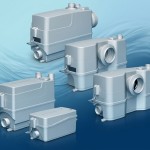
What is the difference between SOLOLIFT2 WC-1, WC-3 and CWC-3?
WC-1 is for a standing toilet, urinal and washbasin. WC-3 adds the ability to connect a bidet. CWC-3 is designed for a wall-hung toilet and can serve a urinal, washbasin and bidet
Which station is suitable for a shower, sink or bidet?
SOLOLIFT2 D-2 is designed for grey water from showers, sinks and bidets. It is not a solution for a toilet with fecal water.
Which station is suitable for a washing machine, dishwasher or bathtub?
SOLOLIFT2 C-3 is suitable for grey waste water from washing machines, dishwashers, kitchen sinks, bathtubs or showers. It can handle waste water up to 90 °C for a limited time.
Do SOLOLIFT2 stations have a cutting system?
The models WC-1, WC-3 and CWC-3 are designed for sanitary wastewater from toilets and have a cutting system. For C-3 and D-2, which are for gray wastewater, the model is selected according to the connected devices and technical conditions.
What is CONLIFT1?
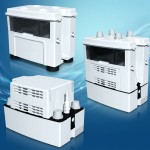
CONLIFT1 is a condensate pump for removing condensate from condensing boilers, air conditioning and cooling systems, dehumidifiers and evaporators. It is suitable for condensate with a pH above 2.5.
How do I choose the right SOLOLIFT2 model?
Choose according to whether you are connecting a toilet, wall-hung toilet, sink, bidet, shower, bathtub, washing machine or dishwasher; whether the wastewater contains faeces; and whether the room is below ground level.
Product Filter