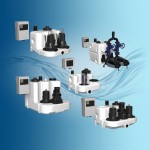
Grundfos Multilift – wastewater lifting systems
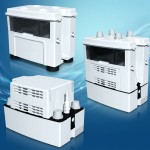
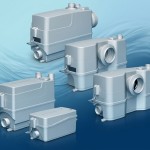
Grundfos Multilift are automatic lifting systems for pumping wastewater from sanitary, commercial and industrial sites where the wastewater cannot be discharged to the sewer by natural slope. The range covers solutions for small domestic installations, residential buildings, hotels, commercial sites and large infrastructure applications.
What is Multilift?
The Multilift lifting system collects wastewater in an integrated tank and pumps it automatically to the sewer network. The solution is used when sanitary appliances are located below the return flow level, in a basement, underground floor or in a place from which wastewater cannot reach the main sewer riser by a natural slope.
Depending on the configuration, the Multilift can operate with one or two pumps. In systems with two pumps, the control can alternate their operation, turn on the second pump when the flow is high and provide redundancy if one pump is not available.
Main applications
- Basements and underground floors in residential buildings.
- Sanitary facilities below the level of the sewer network.
- Single-family and multi-family residential buildings.
- Hotels, guest houses and holiday complexes.
- Offices, administrative and public buildings.
- Restaurants, retail outlets and shopping malls.
- Schools, hospitals and sports facilities.
- Industrial and production premises.
- Underground garages, warehouses and technical rooms.
- Systems where backflow protection to the building is required.
Main advantages
- Automatic start and stop of the pump according to the level in the tank.
- Possibility of working with one or two pumps according to the series and required capacity.
- Redundancy in two-pump systems.
- Possibility to turn on a second pump in case of high inflow.
- High level alarm according to the specific control and configuration.
- Different tank volumes for small and large sites.
- Possibility to choose free passage and impeller type according to the type of wastewater.
- Suitable for installation in rooms with limited natural drainage.
- Design compliant with the requirements for safe wastewater disposal.
How does the system work?
The wastewater flows into the Multilift tank. When the level reaches the set switch-on level, the control system starts the first pump. If the inflow is greater than the capacity of one pump, in dual systems the second pump can also be switched on. Once the level drops to the stop level, the pump or pumps are switched off.
In the event of an emergency high level, the system can activate an alarm. In dual systems, the operation of the pumps alternates to distribute the load and maintain readiness in the event of failure of one of the pumps.
Types of wastewater
- Grey wastewater from showers, sinks, washing machines and other sanitary appliances.
- Black wastewater with fecal matter from toilets.
- Wastewater from residential, commercial and public buildings.
- Wastewater from sites with increased sanitary and hydraulic load.
Construction and functions
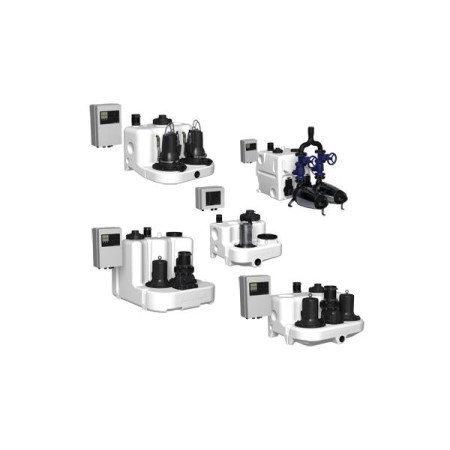
Multilift is a modular lifting system consisting of a collection tank, one or two pumps, a level measuring system, check valves, a control unit and connecting elements. The exact design depends on the series and capacity selected.
| Component / function | Purpose |
|---|---|
| Collection tank | Collects wastewater before pumping; volume is selected according to expected inflow and type of application. |
| Pump or pumps | They pump wastewater to the sewer; systems can be with one or two pumps. |
| Level measurement | It monitors the level in the tank and automatically controls the start/stop of the pumps. |
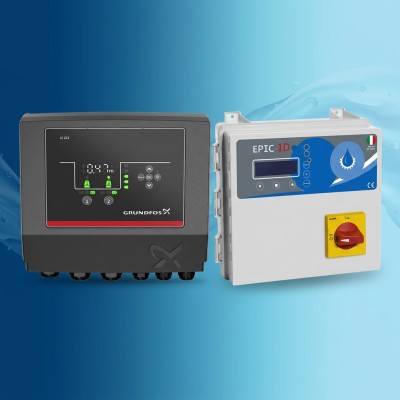
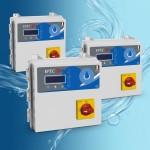
| Control unit | Controls pump operation, pump rotation, high flow activation, and alarm conditions. |
| Check valve | Limits the return of wastewater from the pressure pipe to the tank. |
| High level alarm | Warns of an abnormally high level, such as pump failure, blockage or excessive inflow. |
| Double pump configuration | Provides redundancy, automatic pump rotation and higher capacity at peak load. |
| Pressure pipe | Carries wastewater to the sewer network; diameter is selected to provide a self-cleaning flow rate. |
| Free passage | Determines the system's ability to handle particulates and wastewater with fecal matter according to the selected model. |
Automatic control
- The first pump is turned on when a normal starting level is reached.
- In dual systems, the second pump is turned on at a higher level or when the inflow exceeds the capacity of the first.
- Pumps can operate on a rotational basis to distribute operating time.
- At a high level, the system activates an alarm function according to the configuration.
- After the level drops, the pumps are automatically switched off.
- The control can maintain operation of one pump in the event of failure or service of the other when the system is dual.
Operating mode
Multilift lifting systems are designed for intermittent operation in S3 mode. The manual specifies an approximate S3 30% mode with a 1 minute cycle, in which the pump operates for 30 seconds and rests for 30 seconds. The approximate maximum number of starts is up to 60 per hour, the exact permissible operation depending on the specific model and hydraulic sizing. [12][13]
Installation and correct selection
Correct sizing and installation are critical for the reliable operation of the lifting system. Multilift is selected according to the applicable local requirements and the principles for sizing wastewater systems, including EN 12056-2. [12][13]
What data is needed for selection?
| Parameter | What is determined? | Why is it important? |
|---|---|---|
| Wastewater type | Greywater or blackwater with fecal matter. | Determines the pump type, free passage and appropriate series. |
| Sanitary appliances | Number of toilets, sinks, showers, bathtubs, washing machines, kitchens and other consumers. | It is used to calculate the waste flow rate Qww. |
| Object category | Residential, hotel, office, public, commercial or industrial facility. | It affects the concurrency rate and the required redundancy. |
| Geodetic height | Difference between the system level and the connection point to the sewer. | Determines the required pressure. |
| Pressure pipeline | Length, diameter, bends, valves and other resistances. | Determines pressure losses and the actual operating point. |
| Reservation required | One or two pumps. | For critical sites, the dual system provides higher reliability and peak capacity. |
| Tank volume | The required buffer volume according to the inflow and pump mode. | It limits frequent switching on and provides a reserve in case of temporary increased inflow. |
Basic installation rules
- Install the system in an accessible technical room with sufficient space for servicing.
- Ensure proper connection to the sewer system and ventilation pipe.
- Provide a check valve and a shut-off valve on the pressure pipe according to the specific model and local requirements.
- The pressure pipe must be sized for self-cleaning speed.
- Provide an alarm system for sites where wastewater overflow would create risk or damage.
- For dual systems, check the settings for alternation, simultaneous operation, and high level.
- Observe local requirements for electrical protection, grounding, ventilation and sewage systems.
- Selection and installation must be carried out by a qualified designer and installer.
How to calculate the required flow rate?
The waste flow rate is calculated according to the number and type of sanitary appliances and the simultaneity factor for the specific building category. The document uses the principles of EN 12056-2, where the calculated flow rate \(Q_{ww}\) is determined by the sum of the design flow rates of the sanitary appliances and the simultaneity factor. [12]
Grundfos Multilift series
The Multilift series offers solutions for various capacities – from compact stations for small domestic installations to large systems for high flow rates and infrastructure applications. [13]
Indicative data by series
| Series | Approximate tank volume | Approximate maximum pressure | Approximate maximum flow rate | Typical application |
|---|---|---|---|---|
| Multilift MSS | 44 liters | Up to 11 m | Up to 1120 l/h | Small residential and household installations |
| Multilift M | 92 liters | Up to 20 m | Up to 2480 l/h | Residential, commercial and public buildings |
| Multilift MOG | 93 liters | Up to 44 m | Up to 2000 l/h | Specific wastewater and higher head applications |
| Multilift MD | 130 liters | Up to 20 m | Up to 5160 l/h | Larger residential, commercial and public buildings |
| Multilift MDG | 93 liters | Up to 45 m | Up to 3000 l/h | Specific wastewater and high pressure requirements |
| Multilift MLD | 270 liters | Up to 20 m | Up to 11,400 l/h | Large buildings and high-flow systems |
| Multilift MD1VSL | 450–1350 liters | Up to 32 m | Up to 43,200 l/h | Industrial, infrastructure and highest throughput applications |
Which series is suitable?
- MSS: For small domestic facilities and a limited number of sanitary appliances.
- M / MOG: For standard residential, commercial and public applications.
- MD / MDG: For larger sites, more sanitary appliances and higher flow rates.
- MLD: For large sites with high capacity and buffer volume requirements.
- MD1VSL: For large industrial, infrastructure and specialized applications with very high flow rates.
The description is based on the documents provided for Grundfos Multilift. The data given for the series are indicative. For the final selection, the specific model, the design waste flow rate, the required head, the type of waste water, the size of the discharge pipe and the requirements of local regulations are required.